Why Everyone Is Talking About Mahjong Right Now (And Why You Should Be Playing)
The Social Tiles · Glenview, IL
If mahjong has been showing up on your Instagram feed, in your group chats, at your neighbor’s dinner party, and everywhere in between lately, you are not imagining it. The game your grandmother played is genuinely having a moment. And honestly? We’re here for it.
At The Social Tiles, we’ve built a community around mahjong on Chicago’s North Shore because we believe it’s more than tiles on a table. It’s connection. It’s tradition. It’s a much-needed excuse to get out of the house, order a drink, see your friends, meet new people, and use your brain in a way that does not involve someone asking what’s for dinner.
And yes, it’s also a really, really good time.
Here’s why we think mahjong deserves a spot in your life too.
01
Mahjong Is Officially Trending … And Then Some
The data is kind of wild. Yelp named mahjong a top trend of 2026, with searches for mahjong clubs surging over 4,400% year over year. Mahjong events on Eventbrite jumped 179% nationwide between 2023 and 2024. Luxury hotels are hosting mahjong nights. Members-only clubs are bringing in tiles. And yes, Julia Roberts reportedly plays every week with her friends.
Analysts project the global mahjong market will grow from $1.9 billion in 2024 to $3 billion by 2035. Some are already asking whether mahjong could be the next pickleball, except with better aesthetics and way more interesting conversation at the table.
What’s actually behind it? People are hungry for something real. After years of screens and scrolling, there’s a pull toward in-person connection built around a shared activity. Mahjong delivers that in a way that’s genuinely hard to replicate.
“From luxury hotels to neighborhood living rooms, mahjong is everywhere right now.”
Julia Roberts Talks Mahjong
02
It Bridges Generations Like Nothing Else
Here’s something you don’t often hear about trending hobbies: mahjong naturally pulls every generation to the same table. Literally.
In Los Angeles, a community organizer recently launched a group called Intergenerational Mahjong at a local senior center. Their last gathering drew more than 70 people speaking 10 different languages, ranging from kids to retirees, all bonding over tiles. Mahjong clubs across the country regularly see players in their 20s sitting alongside players in their 80s. Grandmothers bringing granddaughters. First-timers sitting next to people who’ve been playing for 50 years.
We know this firsthand, because it’s exactly how The Social Tiles began.
Our co-founder Lizzie learned mahjong from her grandmother Barbara, who eventually gifted her the set they’d played on together. Those tiles still come to every event. Christina grew up with Filipino mahjong as the soundtrack to every family gathering, the sound of shuffling tiles basically the sound of home. And Liz learned Chinese mahjong from her mother-in-law, a process that became one of the most meaningful parts of that relationship.
“Three founders. Three variants of mahjong. Three completely different paths to the same table.”
And when we taught our very first lesson as The Social Tiles, the moment could not have been more perfect: two daughters brought their mothers, both grandmothers, to learn alongside them, so all four of them could finally sit down and play together. We couldn’t have scripted it.
This happens because mahjong creates a shared framework where everyone starts from the same place. Experienced players have wisdom to offer. Newer players bring fresh energy and a different kind of strategy. And the table becomes somewhere both feel at home. No matter the variant — American, Chinese, Filipino, Japanese — the heart of the game is the same. Gather. Play. Connect.
03
It Creates Real Connection — Phones Down, Eyes Up
Most of us are at least a little lonely, even when we’re technically surrounded by people. We scroll instead of talking. We text instead of gathering. We wonder why we feel disconnected even with a full calendar.
Mahjong solves this in a pretty specific way. When you’re watching for the tile you need, tracking what your opponents are discarding, and trying to read the strategy unfolding across the table, there genuinely is no room for your phone. One journalist who plays weekly with friends described it well: the phones get tossed aside because there’s no room to worry about anything else when you need to pay attention to the tiles.
This is what social scientists call a “third place,” the space between work and home where community actually forms. Mahjong nights are becoming the reason people show up, stay late, and come back next week. Not because they have to. Because they want to.
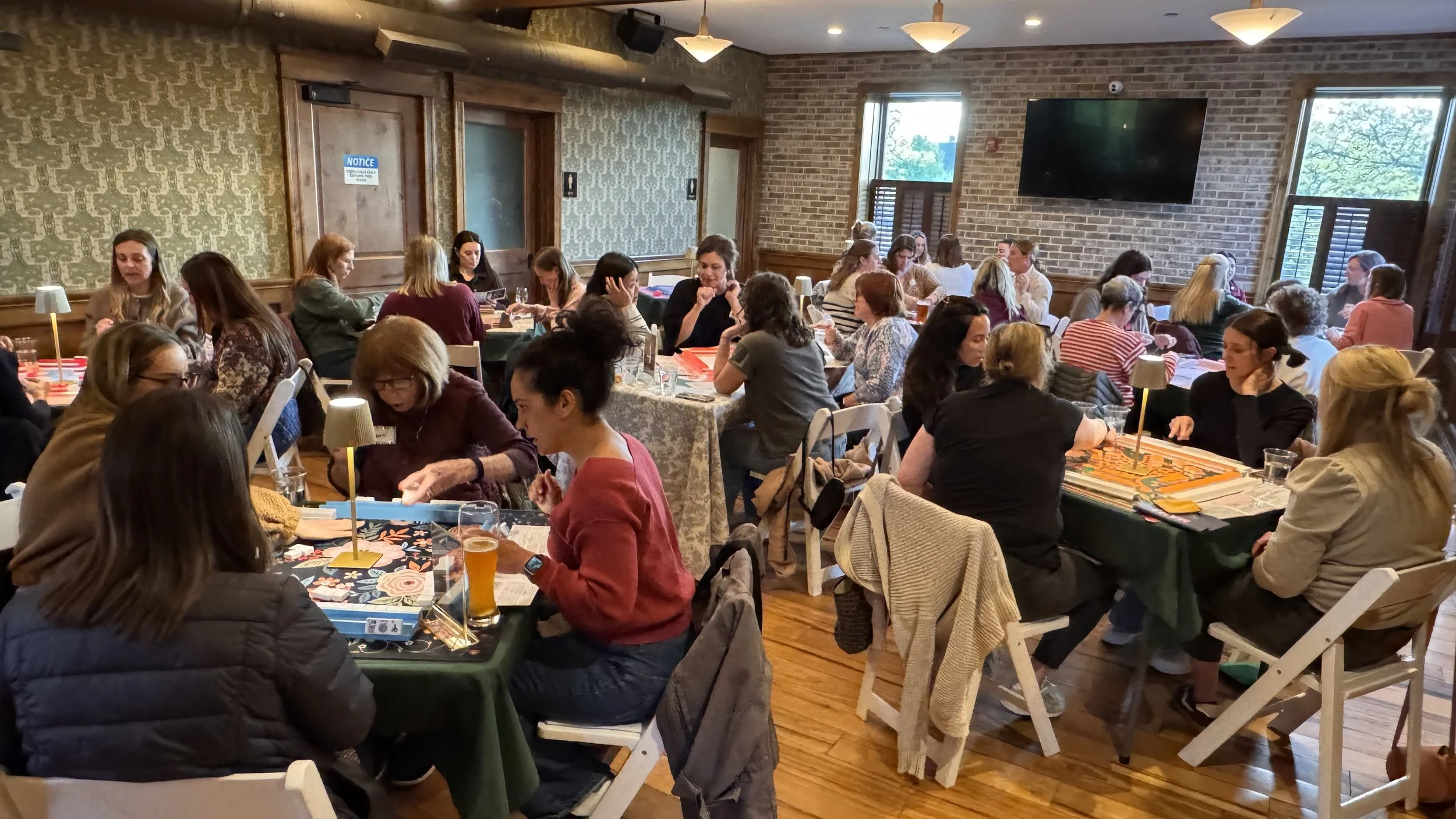
At The Social Tiles, we’ve watched strangers become regulars, and regulars become actual friends. That doesn’t happen on an app.
04
It Keeps Your Brain Sharp, Science Says So
Here’s something your neurologist and your social calendar actually agree on: mahjong is good for your brain.
A 2024 scoping review published in The Journal of Prevention of Alzheimer’s Disease analyzed data from 53 studies and found that regular mahjong players show improved memory, stronger cognitive flexibility, and significantly slower rates of cognitive decline. A separate study found that just 12 weeks of playing improved memory, attention, and the ability to complete everyday tasks.
Behavioral scientist Dr. Deepika Chopra calls mahjong “a brain gym,” noting that it taps into working memory, pattern recognition, and strategic decision-making, all things known to keep our brains sharp as we age. What makes it particularly effective is that all of that is happening while you’re also socially engaged and actually enjoying yourself.
“Think of it as your weekly mental workout that you’ll actually look forward to.”
The game fires up your brain on multiple levels at once: strategic planning, pattern recognition, memory, real-time adaptation. And unlike the brain-training apps you do alone on your phone, mahjong layers in the social connection that research also shows is protective against cognitive decline.
05
The Tiles Have Never Been More Beautiful
Let’s talk about the aesthetic moment mahjong is also having, because it matters more than you’d think.
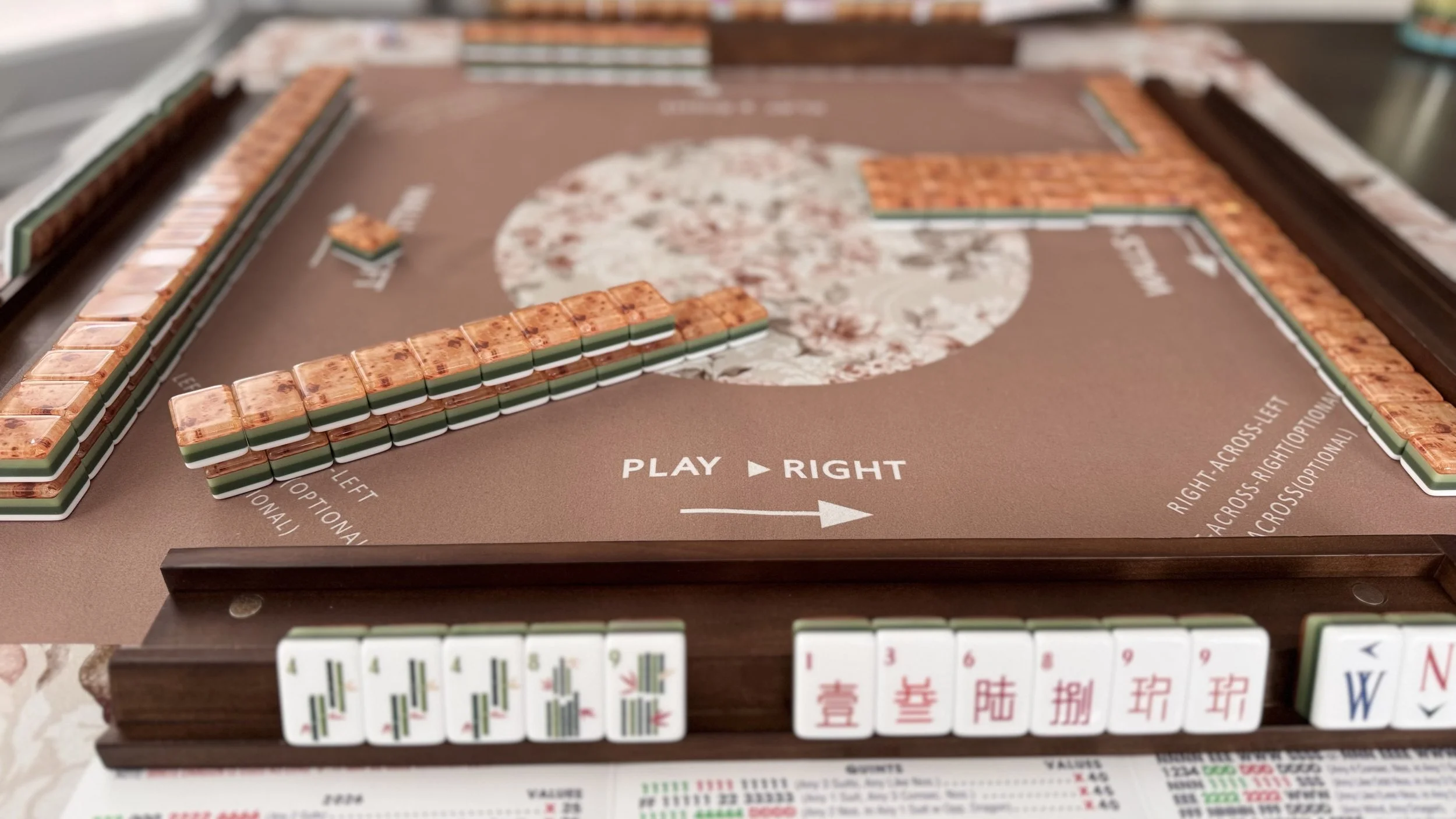
If your only mental image of mahjong tiles is the heavy, yellowed set in someone’s closet, you’re in for a pleasant surprise. Today’s mahjong world includes tiles in every imaginable style: hand-painted botanicals, acrylic in jewel tones, minimalist modern designs, custom artwork, sets made to be displayed as much as played. The accessories have followed: gorgeous tile bags, lacquered cases, custom racks, coordinating table covers.
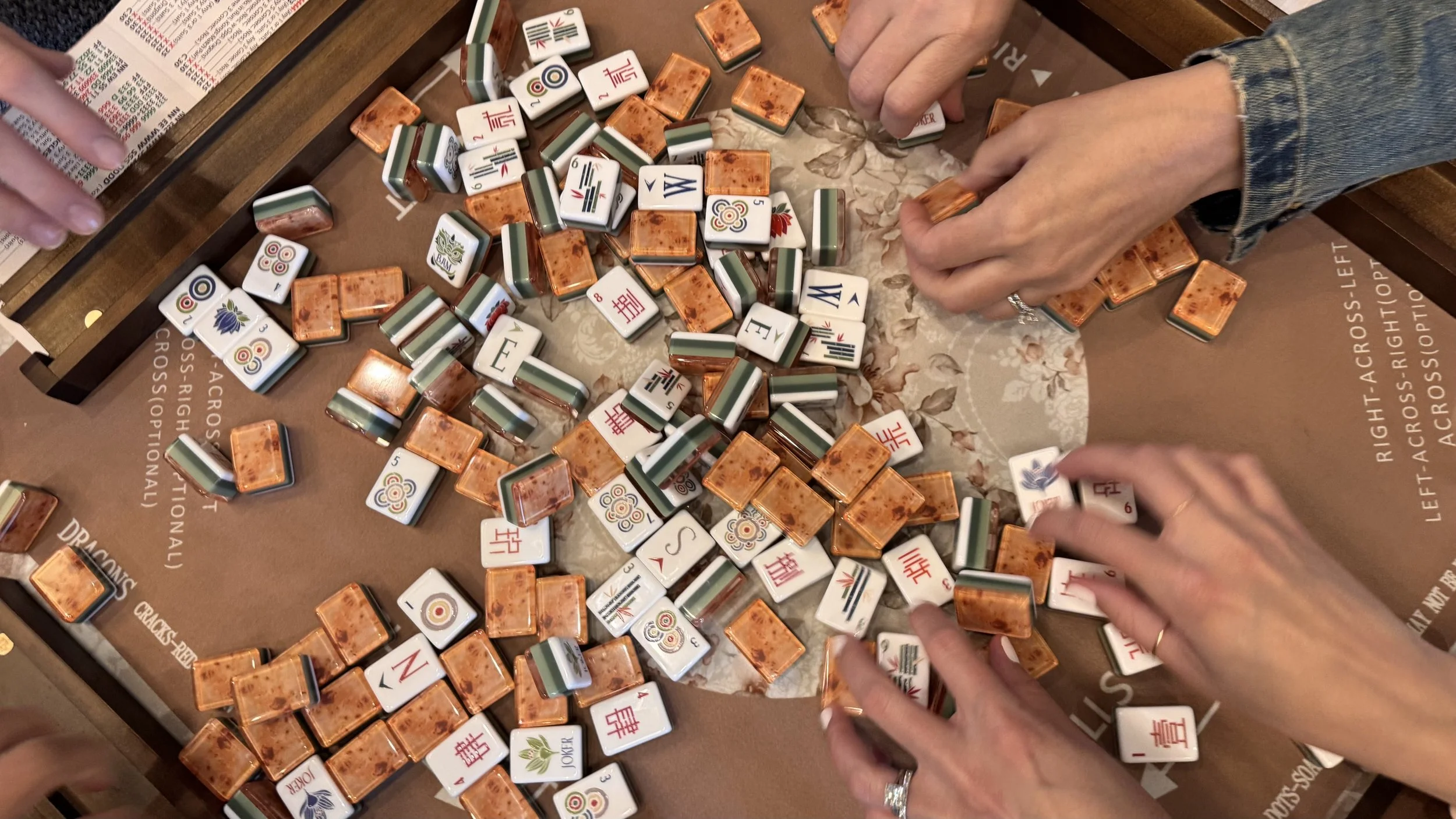
Accessible, beautiful equipment invites new players in. It makes the game feel like yours. Whether you want to honor the traditional aesthetic or express something entirely your own, there’s a set for you. At The Social Tiles, we love everything from classic ivory to the most design-forward sets on the market. Beauty is part of the welcome.
06
You’re Part of Something Ancient
Mahjong originated in China in the 1800s. For centuries, it has been at the center of family gatherings, celebrations, and community rituals across cultures and continents. The Chinese New Year tradition of gathering generations around the table is one of the oldest and most beloved holiday customs in the world.
The game traveled with communities across Asia, to America, to Europe, and beyond, adapting as it went while keeping its essential spirit. More than 40 variations are played around the world today. American mahjong developed its own distinct rules and culture, embraced deeply by Jewish communities in the mid-20th century and passed down through generations ever since. Filipino mahjong became the heartbeat of family parties and holidays. Chinese mahjong carried meaning across kitchens and in-law relationships and language barriers.
All three of those threads live in our founding story. We play American mahjong, and we do it with deep respect for every version of this game that came before us and every family it has brought together.
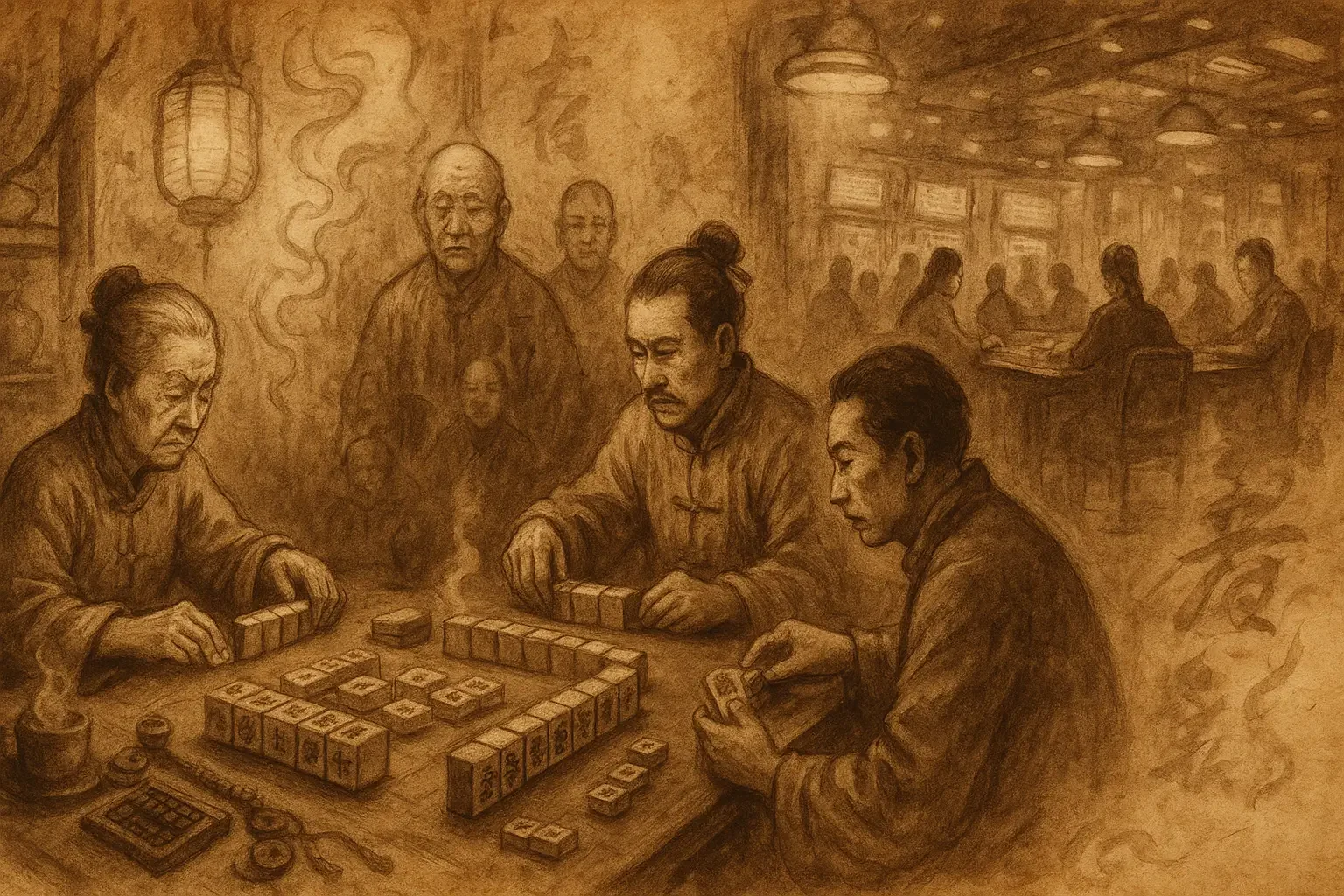
“When you sit down at a mahjong table, you are joining a lineage that stretches back 150 years and touches cultures across the globe.”
07
It Gives Families a Common Language
Of all the reasons we love mahjong, this one might be the most quietly powerful: it gives families something to share across every divide.
Different ages. Different backgrounds. Even different politics. None of that disappears at the table, but it does quiet down, because everyone is too busy watching the tiles. In that shared focus, something opens up. Conversations start. Stories come out. A grandmother shows her granddaughter a move she learned 40 years ago in another city, another life. A son watches his parents be competitive and funny in a way he doesn’t get to see anywhere else.
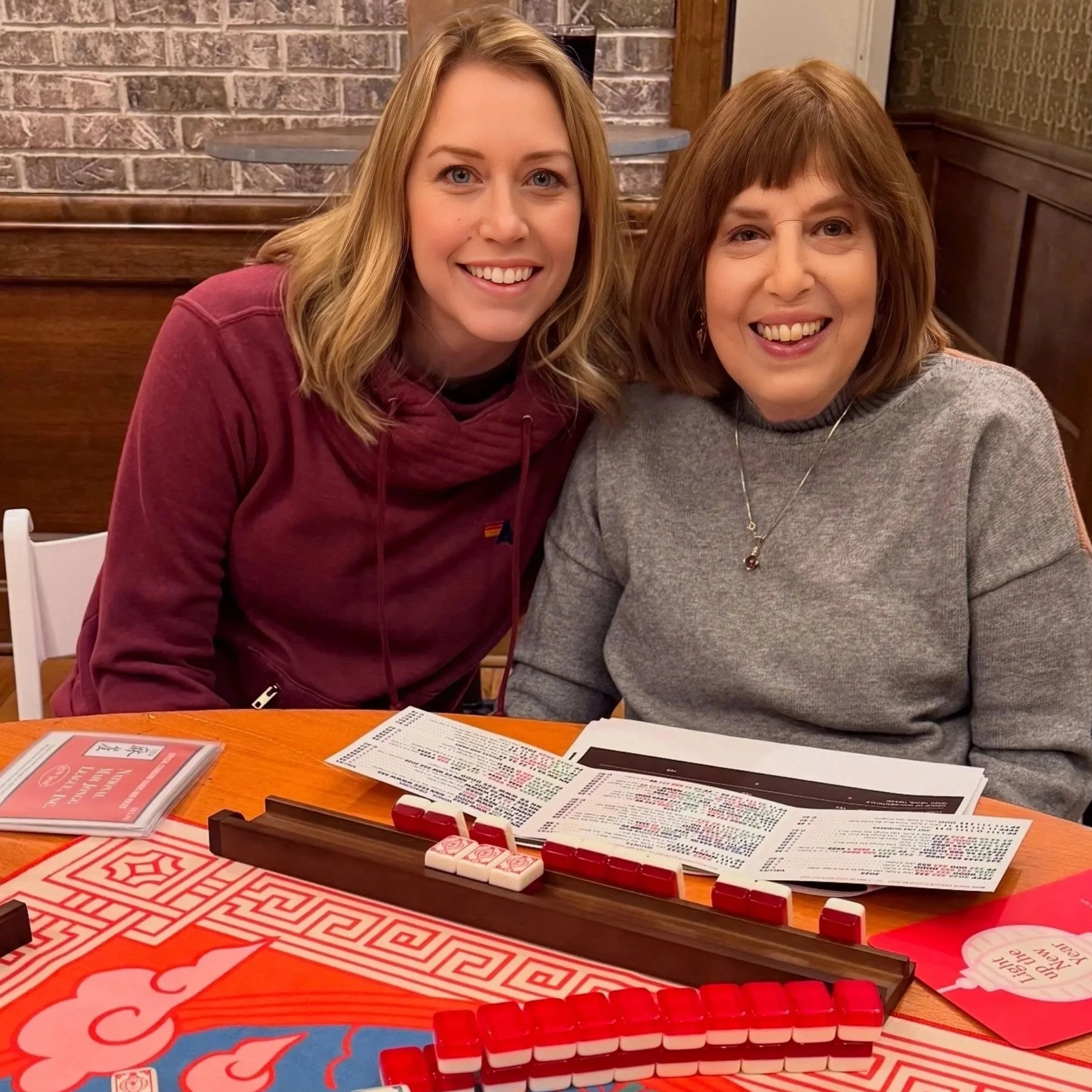
“Everyone’s grandma knows how to play. Now it’s your turn.”
This is what we mean when we say mahjong is for everyone. It doesn’t ask you to have anything in common going in. It creates common ground by the time you leave.
Come Play With Us
Whether you’ve been playing for decades or have never touched a tile, there’s a seat for you at The Social Tiles. We host open play, lessons, and community events across Chicago’s North Shore, including Glenview, Northbrook, and Wilmette, for players at every level.
Because the best thing about mahjong? The game is always better with more people at the table.
The Social Tiles is a community mahjong organization based on Chicago’s North Shore, bringing people together through American mahjong events, open play, and lessons.
